

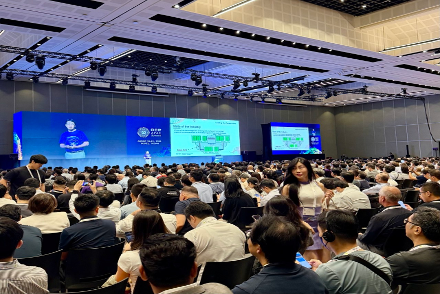
IOActive recently attended the 2026 OCP APAC Summit in Taipei. Below are our key takeaways from two days with the Open Compute community, along with a short recap video from the show floor at the end of this post.
Key Takeaways
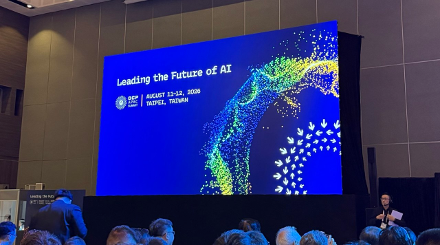
- The 2026 OCP APAC Summit (August 11–12) drew hyperscalers, semiconductor companies, device manufacturers, and infrastructure providers under the theme “Leading the Future of AI.”
- AI security conversations extended beyond compute performance to the full stack: networking, cooling, storage, power, firmware, and the security controls underneath all of it.
- Openness was a recurring theme, anchored by a dedicated SONiC Workshop on the open-source network operating system.
- Multiple talks and vendor conversations pointed to growing interest in OCP S.A.F.E., the framework for independent security review of device firmware.
- IOActive helped develop OCP S.A.F.E. from its early stages and continues to evaluate firmware security for device manufacturers today.
AI in the Agentic Era
AI was naturally at the center of this year’s summit, but the conversation went well past GPUs and raw compute performance.
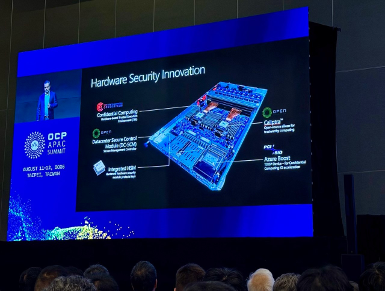
The future of AI depends as much on trustworthy infrastructure as it does on faster accelerators and larger clusters. That means thinking about security across the whole stack, from applications and operating systems down to the firmware and hardware controlling the physical devices.
Open Data Centers and Open Networking
Openness was the other constant. The Open Compute Project’s philosophy of open hardware specifications, interoperable architectures, open firmware increasingly extends to networking, and the summit’s dedicated SONiC Workshop was a good example. SONiC, the open-source network operating system, brought together developers, users, maintainers, and vendors to compare notes on real-world deployments.
The direction of travel is toward data centers built from a diverse ecosystem of components rather than a single vertically integrated platform. That shift raises a practical question for operators: as devices and firmware arrive from a wider set of suppliers, how do you know they were built securely?
OCP S.A.F.E. and the Case for Independent Security Review
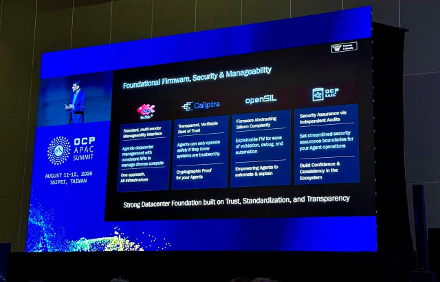
That question was the throughline of many of our conversations at the summit. Multiple technical talks and device-vendor discussions pointed to growing interest in OCP S.A.F.E., which lets vendors have their products evaluated by independent security reviewers against an established methodology.
For manufacturers, that’s more than a compliance checkbox. An independent review can surface vulnerabilities in firmware and other security-critical components before devices ship at scale, and it gives customers a concrete basis for confidence in what they’re deploying. As the supply chain behind any given rack grows more diverse, security assurance needs to travel with it.
IOActive has been involved in developing the OCP S.A.F.E. framework since its early stages, and we continue to work with device manufacturers on firmware and security assessments across the infrastructure being deployed today.
Taipei as a Meeting Point
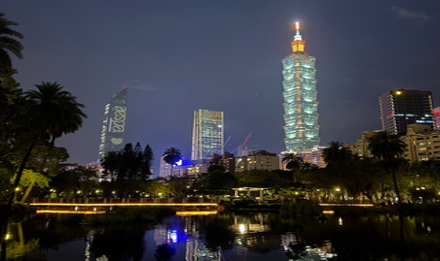
Taipei was a fitting location for these conversations. Taiwan sits at the center of the global technology supply chain, home to a dense concentration of semiconductor companies, server manufacturers, ODMs, component suppliers, and firmware developers—much of the ecosystem responsible for the infrastructure data centers worldwide run on.
The summit itself made room for those conversations to happen: networking lounges, meeting areas, and coffee stations throughout the venue, lunch on-site, and reception drinks in the Expo Hall on the first evening. Live translation kept the technical sessions accessible to an international audience.
If you’re a device vendor preparing for OCP S.A.F.E. or looking to strengthen your firmware’s security, contact IOActive. Our team supports OCP S.A.F.E. assessments and independent firmware source-code security reviews.
Watch Our OCP APAC Summit Recap
Want to see the event from the show floor? We captured some of the technologies, conversations, and demonstrations from our time at the 2026 OCP APAC Summit in Taipei.